




The global journey of Sambalpuri handloom is very long. It has travelled from the village looms of Odisha to the fashion shows around the globe.
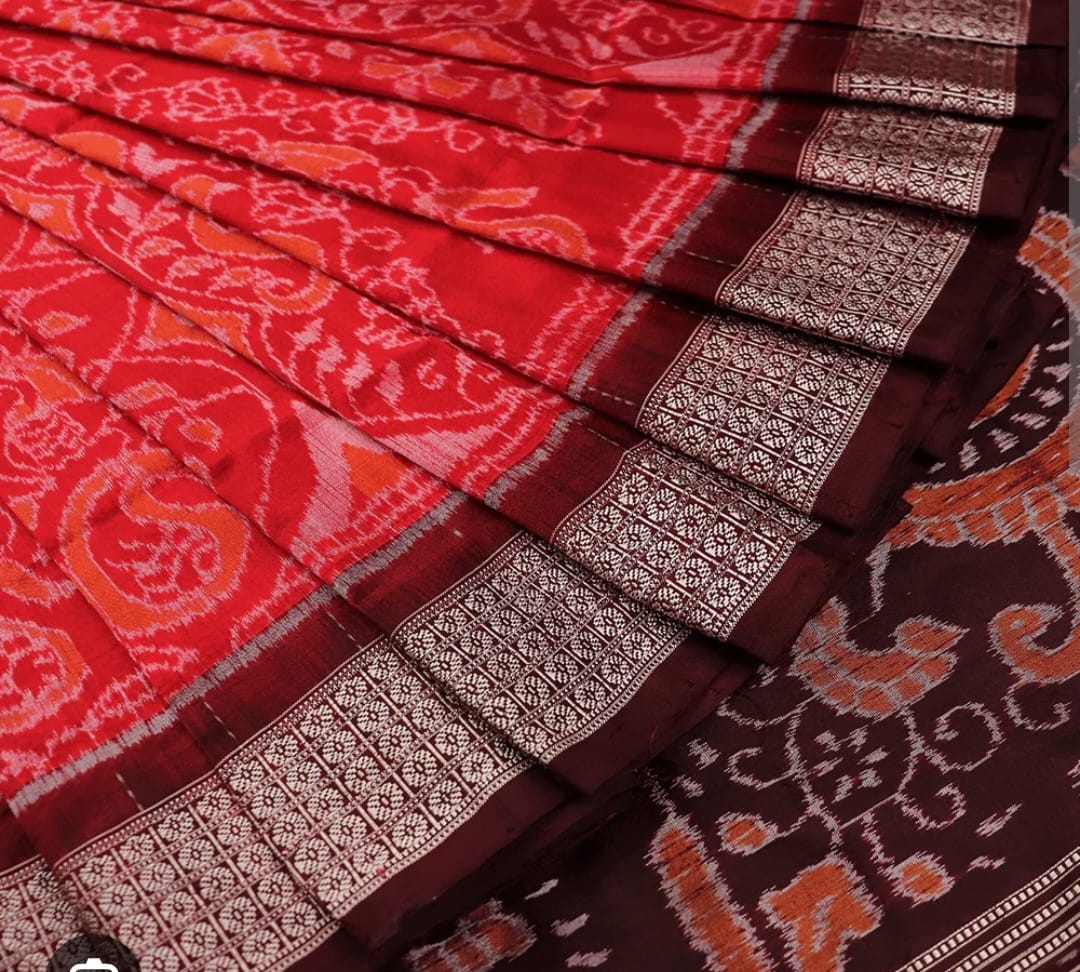
At the heart of every Sambalpuri garment lies the Bandha (Ikat) technique, locally known as ‘Bandhakala’. Unlike printed fabrics, the patterns are created through a laborious process where the warp and weft threads are tied and dyed prior to weaving to form seamless, double-sided patterns. Each tie must be perfectly aligned so that when the threads are woven, the intended motif emerges with its signature blurred edge. The motifs are inspired by regional temple architecture, flora, fauna and sacred symbols.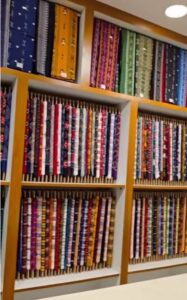
The journey of Sambalpuri handloom is marked by several key transformations. During the Silk Route era, early trade links established Odisha’s textiles as a prized export to Southeast Asia.
During the 1950s-80s, visionaries like Krutartha Acharya and Radha Shyam Meher modernized techniques and expanded the market of Sambalpuri handloom beyond Odisha.
Sambalpuri handloom gained widespread national fame during the 1980s, when former Prime Minister of India, Indira Gandhi began wearing Sambalpuri sarees. Her preference for Sambalpuri handloom turned the saree into a symbol of Indian grace and intellectualism.
To protect authentic weavers and traditional livelihoods, classic varieties like Sambalpuri tie and dye fabrics achieved official Geographical Indication (GI) registry protection. The Geographical Indication (GI) status has helped protect the authenticity of ‘Sambalpuri Bandha’, distinguishing it from power-loom imitations.
Designers are now integrating Bandha patterns into modern designs in different fashion shows across the world. In recent times, different social media and e-commerce platforms have allowed master weavers to bypass middlemen, connecting directly with a global diaspora. Now, Sambalpuri handloom is no longer just a traditional attire for festivals; it is a versatile fabric used in home decor, corporate wear, and contemporary art.
The Sambalpuri thread connects the past to the future. In today’s world, Sambalpuri weave finds itself perfectly positioned. It stands as a beacon of slow, eco-friendly production gaining popularity in every corner of the world.
Krittika Satpathy
Bargarh